How to Make a Constant Force Spring
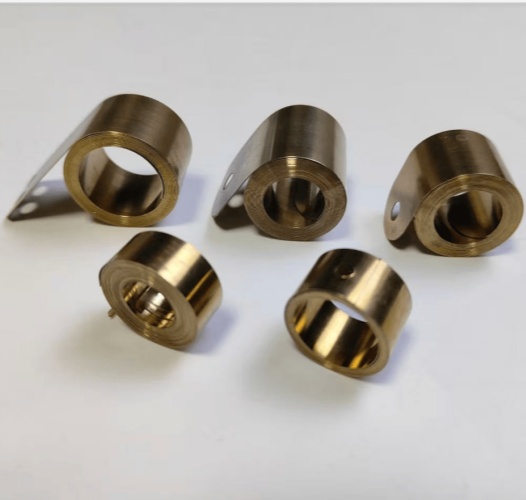
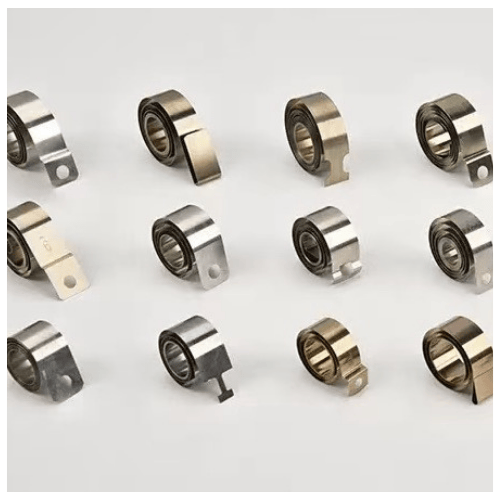
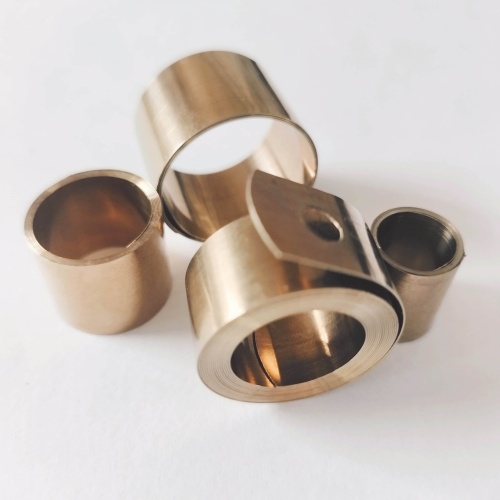
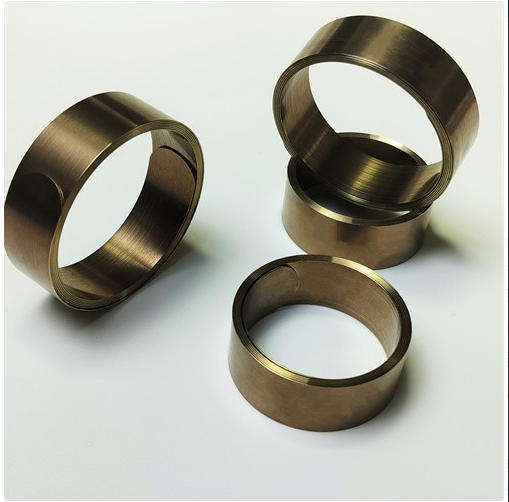
Constant force springs are widely used in retractable systems, cable management devices, and precision mechanical assemblies. Their ability to deliver nearly constant force throughout extension makes them critical in many industrial and commercial applications.
This guide outlines the key steps involved in manufacturing a high-quality constant force spring.
1.Constant force spring manufacturing process flow from raw material to final inspection:
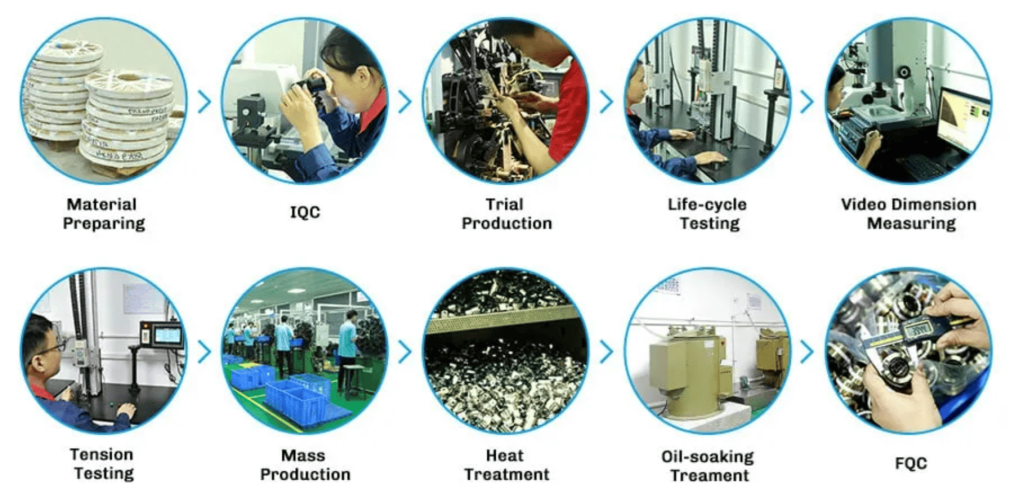
The first and most important step is selecting the appropriate material, as it directly impacts performance, durability, and corrosion resistance.
Common materials include:
High yield stainless steel strip – ideal for corrosion resistance and long service life
Carbon steel strip – cost-effective and suitable for general applications
Material choice will also influence forming processes, heat treatment requirements, and final spring characteristics.
2. Spring Width & Forming Machine Selection
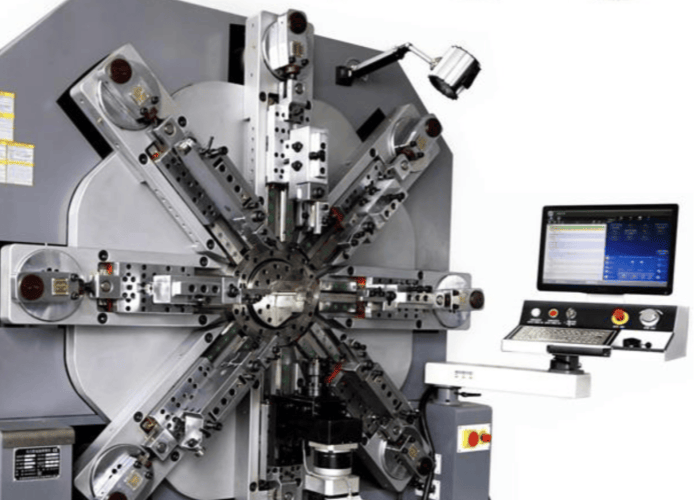
The width of the spring determines which forming equipment is required during production.
At SEME factory:
≤ 35 mm width → Standard spring forming machines
> 35 mm width → Large-scale, specialized forming machines
Using the correct machine ensures:
Consistent coil geometry
Stable force output
Efficient production for bulk orders
3. Forming Process
During this stage, the metal strip is tightly wound onto a drum to create the characteristic flat coil shape.
Key control factors include:
Coil diameter precision
Internal stress control
Surface integrity
Proper forming is essential to achieve consistent force performance across the entire extension cycle.
4. Surface Treatment & Heat Processing
To enhance durability and performance, additional treatments are applied:
Oil soaking – improves lubrication and reduces friction
High-temperature baking – stabilizes material properties and relieves internal stress
Anti-rust treatment – enhances corrosion resistance
These processes significantly improve:
Fatigue life
Operational smoothness
Environmental resistance
5. Quality Control & Mass Production
Producing constant force springs at scale requires strict quality management, including:
Dimensional inspection (thickness, width, coil diameter)
Force testing to ensure consistency
Surface quality checks
Reliable quality control ensures every batch meets international standards and customer specifications.
Applications of Constant Force Springs
Constant force springs are commonly used in:
Cable retractors and hose reels
Automotive systems
Medical devices
Office equipment (printers, scanners)
Fitness equipment (Pilates reformers)
Why Choose SEME for Constant Force Springs?
Dongguan Seme Precision Hardware Co., Ltd. offers:
Custom spring design and engineering support
Advanced forming equipment for various sizes
Stable quality with strict inspection processes
Competitive pricing for global markets
Whether for prototyping or large-scale production, we provide reliable solutions tailored to your application.
Contact us today for technical support or sample requests.